The pursuit of a durable, long-lasting roadbed is an exercise in applied geotechnical engineering, where the selection and processing of aggregate form the non-negotiable foundation. While various crushed stones are employed, granite consistently emerges as the premier material for high-stress pavement layers. Its dominance is not accidental but rooted in intrinsic physical properties that are only fully realized through precise, technologically advanced crushing. The journey from raw igneous rock to superior roadbed aggregate is a deliberate transformation. Modern granite crusher machine is not mere size-reduction devices; they are instrumental in unlocking and optimizing the material’s inherent potential for strength, interlock, and longevity. The quality of the final product is a direct function of the processing methodology applied.

## The Material Imperative: Granite's Innate Structural Superiority
Granite’s suitability originates in its petrological character. As a plutonic igneous rock, its slow cooling history fosters the growth of a tightly interlocking crystalline matrix primarily composed of hard minerals: quartz, feldspar, and mica. This composition grants it exceptional mechanical properties. Its high compressive strength and impressive hardness, measured on the Mohs scale, provide fundamental resistance to the crushing loads imposed by heavy traffic. More critically, granite exhibits a low absorption rate. This characteristic minimizes water intrusion, a primary agent of pavement failure through freeze-thaw cycles and moisture-induced weakening of underlying layers. The material’s natural durability translates directly into reduced rutting, shoving, and raveling over the design life of the roadway.
Beyond basic strength, the mineralogical stability of granite is paramount. A high-quality granite source possesses chemical inertness. It does not react deleteriously with water, asphalt binders, or cement in stabilized applications. This ensures the structural integrity of the aggregate skeleton remains intact, preventing the internal degradation that plagues aggregates containing softer or reactive minerals like clay or certain forms of silica. The roadbed is a permanent structural element; its core material must be equally permanent. Granite provides this geological assurance, offering a predictable performance envelope that engineers can rely upon for decades.
## The Precision Processing Paradigm: Crushing Technology as a Determinant of Quality
The inherent quality of the parent rock is a prerequisite, but it is the crushing process that determines the functional geometry of the aggregate. Not all crushed stone is equal. The type of [rock crushing machine](https://aimixgroup.com/stone-crusher-plants/rock/) employed directly governs two critical outcomes: particle shape and gradation control. Jaw crushers perform the primary break, creating the initial fracture. For superior roadbed material, however, the secondary and tertiary stages are decisive. Cone crushers, operating in a compressed bed, are engineered to produce a high percentage of cubical particles. This cubicity is non-negotiable for durability. Angular, cubical particles create a dense, interlocking matrix under compaction. This mechanical interlock distributes load efficiently and resists movement, preventing the aggregate migration and deformation that lead to pavement failure.
Conversely, impact crushers, which use high-speed impellers, tend to produce a more fractured, elongated product. While suitable for some applications, this shape can compromise the optimal packing density required for a stable roadbed. Furthermore, modern crushing circuits incorporate sophisticated screening technology to exert precise control over particle size distribution. A well-graded aggregate blend, from coarse stones down to mineral fines, packs into a nearly voidless structure. The crusher settings and screen configurations must be meticulously calibrated to achieve this optimal gradation curve, often specified by agencies like AASHTO. Excessive fines, or a lack of them, can weaken the matrix or inhibit proper drainage. The machine’s role is to deliver consistency in both shape and size, batch after batch.

## From Quarry to Roadbed: A Systems Approach to Durability
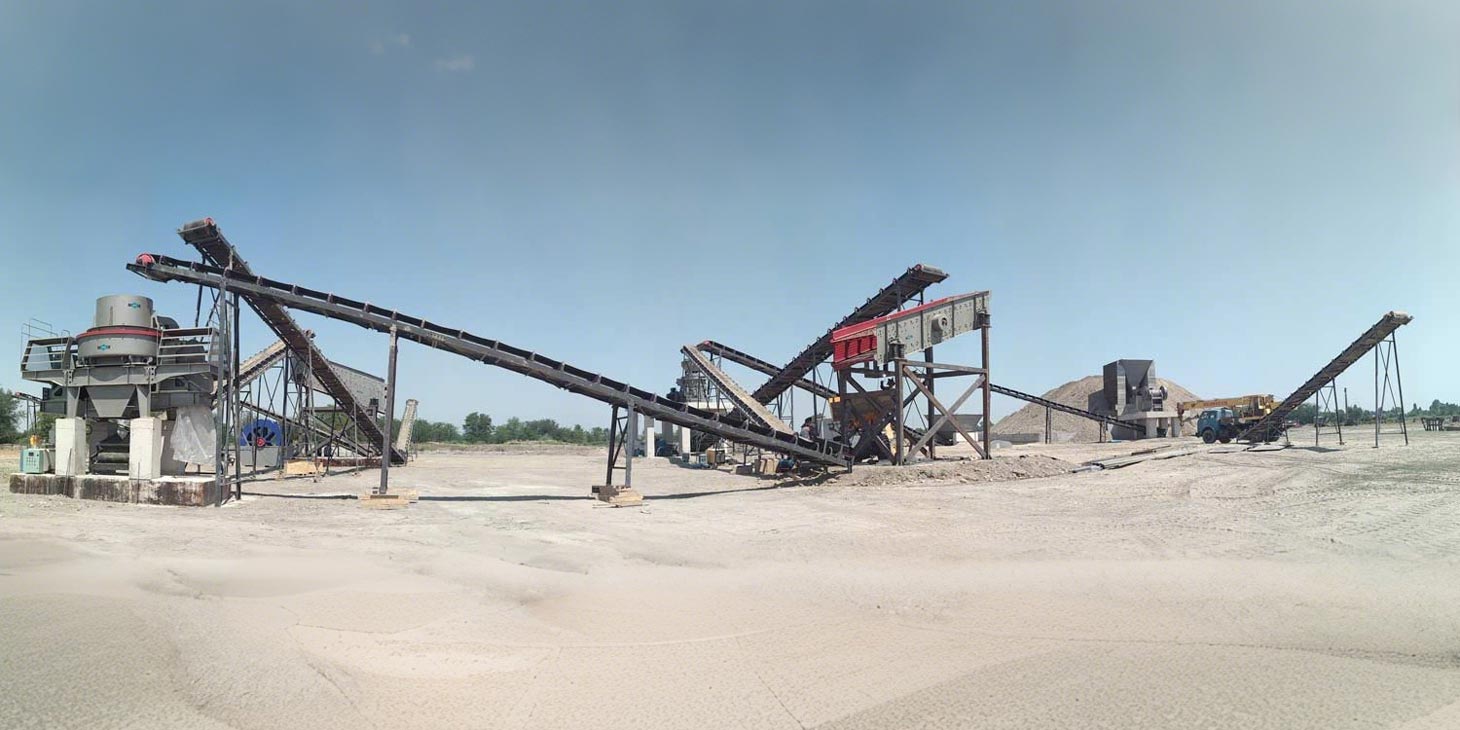
Maximizing durability requires viewing the [stone crushing plant](https://aimixgroup.com/stone-crusher-plants/) as an integrated processing system, not a collection of isolated machines. For granite, this often includes integrated washing and beneficiation stages. Even the hardest granite deposit may contain superficial weathering rinds or minor clay seams. A simple washing screen can remove these deleterious materials, ensuring the final aggregate is clean and free of coatings that would hinder bond with asphalt or cement. This step elevates the material from merely good to specification-grade.
The final component is a regime of rigorous quality assurance. Advanced operations employ automated sampling and particle shape analysis systems. These technologies provide continuous feedback, allowing for real-time adjustments to crusher settings or screen angles to correct deviations from the target specification. This closed-loop control is what separates modern aggregate production from historical methods. It guarantees that the superior properties of the granite are consistently translated into the stockpile. When this systematically processed granite aggregate is placed and compacted, it forms a roadbed of exceptional density and stability. It becomes an immovable platform, resistant to deformation and environmental assault. The crushing machine is the essential intermediary, the technological lens that focuses the raw power of the rock into the refined, engineered material that carries our infrastructure forward. The durability of the road is, in a very literal sense, forged at the crushing plant.

Comments
No comments yet. Be the first to react!