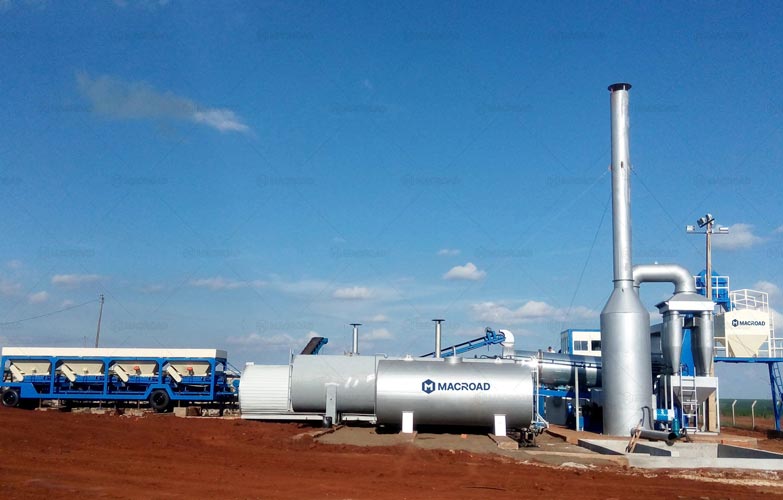
Environmental compliance is rapidly becoming one of the most decisive factors influencing investment decisions in the road construction industry across Latin America. As governments tighten emissions standards, enforce energy efficiency requirements, and promote sustainable construction practices, the price of asphalt plant(precio de planta de asfalto) equipment is no longer determined solely by production capacity and mechanical performance. Instead, compliance readiness, lifecycle emissions performance, and long-term operational efficiency are reshaping how contractors and investors evaluate asphalt mixing plant costs.
For contractors competing in public infrastructure projects, environmental compliance is no longer optional—it is a prerequisite for participation. This shift is pushing the market toward more advanced solutions such as the mobile asphalt plant and the drum mix asphalt plant, both of which offer operational advantages under increasingly strict environmental regulations.
Regulatory Pressure and Its Impact on Asphalt Plant Investment
Across Latin America, environmental policies are evolving in response to national climate commitments and growing public awareness of air quality and carbon emissions. These regulatory changes directly affect the design, configuration, and ultimately the price of asphalt plant equipment.
Emissions Standards and Permitting Requirements
New emissions standards for particulate matter, NOx, SOx, and CO₂ have made permitting more complex and costly for traditional asphalt plants. Older equipment often fails to meet current limits without significant retrofitting, increasing both capital expenditure and project risk.
Modern asphalt plants are now designed with advanced baghouse filtration systems, low-emission burners, and automated combustion control. While these technologies raise the initial price of asphalt plant equipment, they significantly reduce compliance risk and improve operational reliability. Contractors benefit from faster permitting, fewer regulatory inspections, and lower exposure to fines or shutdowns.
Energy Efficiency and Fuel Consumption Controls
Energy efficiency has become a central component of environmental compliance. Many Latin American countries now require energy performance audits for large infrastructure projects, directly influencing plant selection and configuration.
High-efficiency burners, variable frequency drives, optimized drying systems, and heat recovery units are increasingly standard features. These upgrades increase the price of asphalt plant equipment but deliver substantial fuel savings over time. For contractors operating in regions with volatile fuel prices, these savings can significantly improve long-term project profitability.
Recycling Mandates and RAP Utilization
Recycling requirements are also reshaping asphalt plant investment decisions. Regulations promoting higher recycled asphalt pavement (RAP) content are driving demand for plants capable of processing recycled materials without compromising mix quality.
The drum mix asphalt plant has emerged as a preferred solution in many markets due to its compatibility with high RAP ratios and continuous production process. Although the price of asphalt plant systems with RAP-friendly designs is higher, the reduction in raw material costs and carbon emissions delivers strong long-term economic and environmental benefits.
How Environmental Compliance Is Reshaping Asphalt Plant Prices
The growing emphasis on environmental performance is fundamentally altering the cost structure of asphalt mixing plants across Latin America.
Higher Initial Equipment Costs
Compared to previous decades, the upfront price of asphalt plant equipment has increased due to the integration of compliance technologies. Emissions control systems, energy-efficient components, and digital monitoring platforms now form a standard part of plant configurations rather than optional upgrades.
However, this increase reflects a structural shift toward compliance-ready infrastructure assets rather than simple inflation. Modern plants are designed to meet current regulations and anticipate future policy tightening, reducing the need for costly retrofits later.
Lower Long-Term Operating and Compliance Costs
Although the initial investment is higher, environmentally compliant asphalt plants often deliver lower total cost of ownership. Fuel-efficient systems reduce energy consumption, while automated controls improve material accuracy and reduce waste. Compliance-ready designs also minimize the risk of production interruptions due to regulatory issues.
For contractors engaged in long-term infrastructure programs, the long-term cost advantages often outweigh the higher price of asphalt plant equipment at the time of purchase.
Differentiation Between Fixed and Mobile Plant Solutions
Environmental compliance is also influencing the relative attractiveness of different plant types. The mobile asphalt plant(planta de asfalto movil) has gained popularity in regions where projects are dispersed and environmental permitting is location-specific. Its mobility allows contractors to relocate production closer to project sites, reducing transportation emissions and improving overall environmental performance.
While the price of asphalt plant equipment for mobile systems may be higher than basic fixed installations, the logistical efficiency and compliance flexibility they offer often result in lower overall project costs.
Comparing Plant Types Under Environmental Compliance Requirements
Selecting the right plant type has become a strategic decision shaped by regulatory, operational, and financial considerations.
Batch Asphalt Plants
Batch plants remain the preferred choice for projects requiring frequent mix changes and precise formulation control. However, under stricter environmental standards, batch plants must incorporate advanced emissions controls, energy-efficient burners, and improved insulation.
These enhancements increase the price of asphalt plant equipment but also improve compliance performance and production stability. For urban projects and environmentally sensitive zones, upgraded batch plants remain a viable and competitive solution.
Drum Mix Asphalt Plants
The drum mix asphalt plant(planta asfaltica continua) offers inherent energy efficiency advantages due to its continuous production process and integrated drying and mixing operations. These characteristics result in lower fuel consumption per ton of asphalt and reduced emissions intensity.
Modern drum mix asphalt plants are also well-suited for high RAP utilization, making them attractive in markets with strong recycling mandates. Although their initial price of asphalt plant equipment is higher, the operational efficiency and compliance benefits often justify the investment, especially for large-scale highway projects.
Mobile Asphalt Plants
The mobile asphalt plant provides unmatched flexibility for contractors operating across multiple project sites. By reducing transportation distances for hot mix asphalt, mobile plants help lower fuel consumption and emissions associated with material hauling.
From a compliance perspective, mobile asphalt plants simplify permitting by allowing temporary, site-specific installations that meet local environmental requirements. Although their price of asphalt plant equipment may be higher than conventional fixed plants, the environmental and logistical advantages contribute to stronger project economics.
Practical Strategies for Contractors Navigating Compliance-Driven Costs
In an environment where compliance increasingly drives investment decisions, contractors can adopt several strategies to manage asphalt plant costs effectively.
Evaluate Total Lifecycle Cost Rather Than Upfront Price
Rather than focusing solely on the price of asphalt plant equipment, decision-makers should assess lifecycle costs, including fuel consumption, maintenance, compliance expenses, and downtime risks. Plants designed for high efficiency and compliance often deliver superior financial performance over their operational lifespan.
Prioritize Compliance Readiness and Future-Proofing
Investing in a plant that exceeds current regulatory requirements reduces long-term risk and ensures eligibility for future infrastructure projects. Compliance-ready designs also reduce the likelihood of costly retrofits as environmental standards continue to evolve.
Align Plant Selection With Project Portfolio
Contractors should match plant type to their typical project mix. For large, long-term highway projects, a drum mix asphalt plant may offer the best balance between efficiency and compliance. For geographically dispersed or temporary projects, a mobile asphalt plant may provide superior flexibility and environmental performance.
Implications for Asphalt Plant Manufacturers and Suppliers
Environmental compliance is also reshaping competition among asphalt plant suppliers. Manufacturers capable of delivering compliance-ready, energy-efficient, and digitally integrated solutions gain a significant market advantage.
Key differentiation factors increasingly include:
- Emissions performance and certification standards
- Energy efficiency metrics and fuel consumption rates
- RAP handling capacity and material recycling performance
- Automation, remote monitoring, and compliance reporting capabilities
As a result, the price of asphalt plant equipment now reflects not only production capacity but also environmental performance, digitalization, and regulatory resilience.
Looking Ahead: Compliance as a Competitive Advantage
Environmental compliance is no longer simply a regulatory burden; it has become a strategic asset in the Latin American road construction market. Contractors who invest in compliant, efficient, and flexible asphalt plant solutions position themselves to win more projects, reduce operational risk, and improve long-term profitability.
By viewing the price of asphalt plant equipment through a lifecycle and compliance lens—rather than as a standalone capital expense—contractors can transform regulatory pressure into a competitive advantage. Whether through adopting a high-efficiency drum mix asphalt plant or investing in a flexible mobile asphalt plant, forward-looking companies are building production capabilities that align with both environmental goals and business performance.

Comments
No comments yet. Be the first to react!