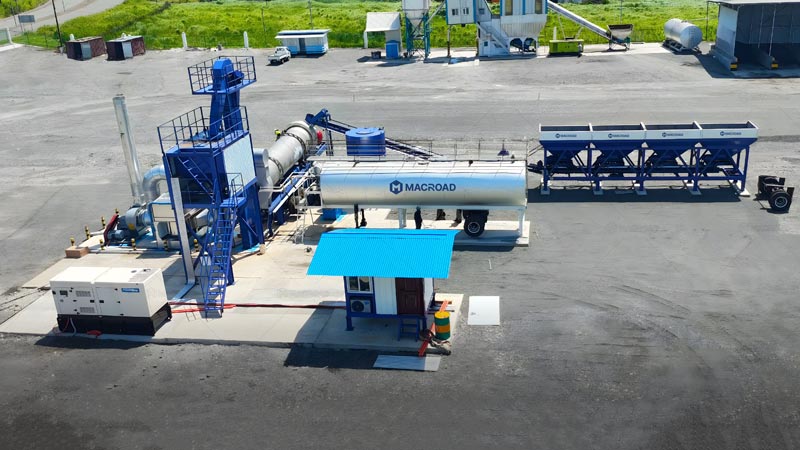
Across Latin America, road construction is evolving from a few large-scale highway projects to a diverse mix of regional highways, municipal rehabilitation works, and rural connectivity programs. This shift makes centralized asphalt production less efficient and increases logistics costs per ton of asphalt. As a result, the mobile asphalt plant has become a strategic solution for contractors who need flexible, high-quality production close to the paving site. In addition, buyers are increasingly evaluating the price of asphalt plant Peru in terms of total operational value rather than just initial investment, while reconsidering the role of the drum mix asphalt plant in mobile production setups.
Infrastructure Development Is Becoming More Decentralized
Smaller Projects Spread Across Regions
Instead of concentrating resources on a few flagship highways, Latin American governments are allocating infrastructure budgets to dozens of smaller roads connecting rural communities, regional trade corridors, and remote industrial zones. This approach requires contractors to operate efficiently at multiple temporary locations with short project timelines, making mobile production a practical necessity.
Challenges In Aggregate Supply
Remote project sites often lack nearby quarries, resulting in long haul distances that increase fuel consumption, transportation cost, and CO₂ emissions. By combining a mobile asphalt plant(planta de asfalto movil) with onsite mobile crushing and screening units, contractors can process stone materials locally. This ensures consistent mix quality and reduces dependency on distant suppliers.
Financial And Operational Advantages
Optimizing Transport And Equipment Utilization
Relocating the asphalt plant closer to the paving zone reduces truck mileage, minimizes idle time, and avoids bottlenecks at unloading points. In mountainous regions of Peru, Ecuador, and Bolivia, moving production units can save significant fuel while reducing project delays caused by narrow or blocked roads. This operational flexibility also allows contractors to respond quickly to unexpected changes in paving schedules.
Total Cost Of Ownership Vs Initial Investment
When evaluating the price of asphalt plant Peru(planta de asfalto Perú precio), contractors consider not only equipment purchase but also import duties, foundation requirements, transport costs, spare part logistics, and operator training. Mobile plants often eliminate the need for heavy civil foundations and simplify relocation, providing better total cost efficiency over multiple projects. In many cases, the mobile option recovers the investment within the first two projects due to reduced transport and setup costs.
Performance Benefits Of Mobile Drum Mix Plants
Continuous Production For Linear Highways
The drum mix asphalt plant(planta de asfalto continua) is recognized for its high-volume continuous output. When mounted on mobile platforms, it delivers consistent production while allowing rapid relocation between sites. This configuration is ideal for long, linear highway projects where maintaining constant output is critical to meeting tight schedules.
Recipe Flexibility And RAP Integration
Mobile batch plants allow contractors to adjust mix recipes quickly to meet regional specification variations. They can also incorporate high percentages of reclaimed asphalt pavement (RAP), which reduces material costs and environmental impact. This flexibility ensures compliance with local standards without maintaining multiple fixed installations.
Environmental And Regulatory Advantages
Lower Emissions And Noise Levels
By relocating production closer to the paving site, contractors cut truck emissions significantly. Modern mobile plants also integrate dust suppression and noise reduction technologies, supporting compliance with increasingly strict environmental regulations throughout Latin America. These features are particularly valuable in projects near urban areas or sensitive ecological zones.
Simplified Environmental Permitting
Mobile installations are typically considered temporary facilities, which streamlines environmental permitting processes. Approval timelines are shorter and less complex than for permanent plants, allowing contractors to start production faster and reduce project delays.
Flexibility In Operational Planning
Adaptation To Weather And Geography
Latin American projects often face unpredictable weather and challenging terrain. Tropical rainfalls, landslides, and high-altitude snow can block access to construction sites. Mobile asphalt plants provide the ability to reposition production quickly, maintaining consistent output despite adverse conditions.
Multi-Project Utilization And Asset Efficiency
Instead of leaving stationary equipment idle after one project, mobile plants can be immediately redeployed to another site. This maximizes the utilization of high-value assets, improving return on investment and operational efficiency across multiple projects.
Strategic Considerations For Contractors
Investing in a mobile asphalt plant allows Latin American contractors to align production capabilities with the realities of dispersed infrastructure projects. Flexible, relocatable systems reduce logistics costs, improve mix quality consistency, and support environmental compliance. Over time, mobile plants not only optimize operational efficiency but also enhance competitive advantage when bidding for regional and provincial projects.
In summary, the combination of cost savings, environmental benefits, operational flexibility, and multi-project utilization explains why mobile asphalt plants are becoming increasingly popular in Latin America. Contractors who embrace mobility can respond more efficiently to project demands, minimize delays, and maintain consistent quality, making these plants an indispensable part of modern asphalt production strategies.

Comments
No comments yet. Be the first to react!