Introduction
The global amusement equipment market has entered a phase of pragmatic expansion. After years of growth driven by large destination-based projects, the industry is shifting toward efficiency, risk control, and sustainable returns. Capital is becoming more selective. Investors now prioritize operational stability, asset durability, and adaptability to diversified consumption scenarios.
Amusement equipment is no longer viewed solely as entertainment hardware. It functions as a composite investment asset that integrates mechanical engineering, visitor psychology, spatial economics, and long-term operational management. Understanding current market conditions and investment opportunities requires a structured and data-oriented perspective.
Global Market Landscape and Demand Drivers
Market demand for amusement equipment is expanding geographically. Mature regions such as North America and Western Europe remain influential in standards and innovation, but incremental growth is increasingly generated in Asia-Pacific, the Middle East, Eastern Europe, and parts of Africa. These regions benefit from demographic dividends, accelerating urban development, and government-supported leisure infrastructure programs.
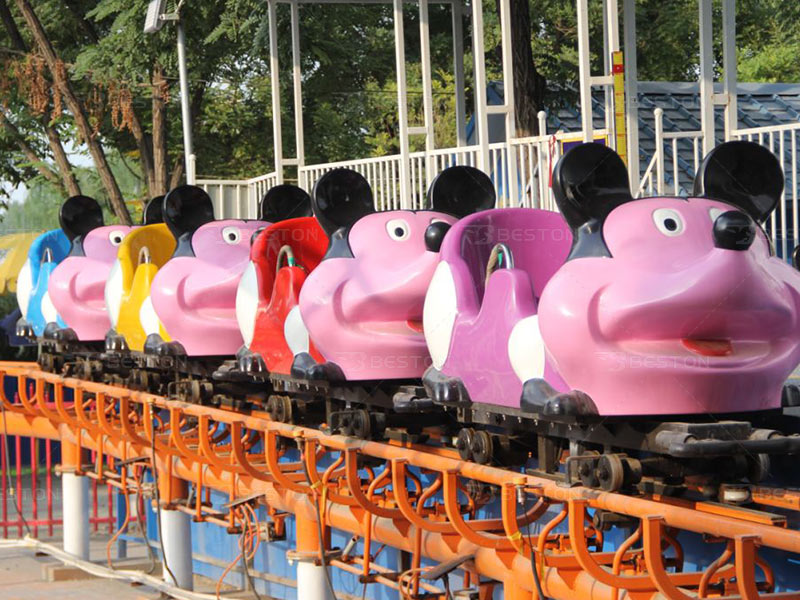
Urbanization has reshaped consumption behavior. High-density cities favor compact entertainment formats with high turnover efficiency. As a result, demand has increased for equipment with small footprints, controlled capacity, and predictable throughput. Family-oriented products are particularly favored. In many emerging markets, classic rides such as a wacky worm roller coaster continue to perform well due to their broad age appeal and modest technical complexity.
 Demographic diversification also drives demand. The modern amusement audience spans children, teenagers, parents, and older adults. Equipment that balances visual attraction with moderate intensity supports longer dwell times and repeat visitation, strengthening overall revenue resilience.
Product Structure and Supply Chain Evolution
On the supply side, the amusement equipment industry is becoming more consolidated and systematized. Manufacturers are extending their scope beyond fabrication to include concept design, layout planning, installation supervision, and lifecycle maintenance. This integrated approach reduces coordination risk for buyers and shortens project delivery cycles.
Procurement behavior has become more rational and data-driven. Investors and operators assess not only initial purchase price but also total cost of ownership, including maintenance frequency, spare parts logistics, and compliance documentation. The global circulation of theme park attractions for sale has intensified competition among suppliers, pushing technical standards upward while compressing margins.
 Advancements in materials engineering are quietly improving asset economics. High-strength steel structures, reinforced composite components, and advanced surface treatments extend service life and reduce downtime. These improvements are particularly valuable in regions with extreme temperature variation or limited technical support resources.
Technology Integration and Operational Intelligence
Digital technology is now embedded in modern amusement equipment systems. Programmable logic controllers, sensor networks, and remote monitoring platforms enable continuous performance tracking. Load cycles, vibration data, and operational anomalies can be analyzed in real time, supporting predictive maintenance strategies.
For operators, this data-driven approach transforms equipment management. Ride performance can be correlated with visitor flow patterns, queue times, and secondary spending behavior. Equipment selection is increasingly influenced by its compatibility with smart management systems and future software upgrades.
However, higher technological density also introduces new requirements. Skilled technical personnel, cybersecurity safeguards, and system interoperability must be considered during project planning. In developing markets, training and after-sales support become critical components of investment evaluation.
Regional Investment Characteristics
Asia-Pacific remains the most active investment region. China, Southeast Asia, and India continue to deploy amusement equipment across indoor parks, commercial complexes, and tourism projects. Policy support and market scale reduce entry barriers, though competition among venues is intensifying.
The Middle East emphasizes high-visibility projects with premium positioning. Equipment specifications often prioritize capacity, durability, and climatic adaptability. Capital intensity is high, but projects benefit from strong branding and government backing.
In Eastern Europe and Latin America, investment strategies are more conservative. Operators favor modular equipment that allows phased development and flexible configuration. In mature markets, capital is increasingly allocated to refurbishment, safety upgrades, and thematic renewal rather than new construction.
Risk Factors and Regulatory Environment
Despite favorable demand fundamentals, investment risk remains a central concern. Regulatory frameworks vary significantly across regions, particularly in safety certification and inspection regimes. Compliance costs and approval timelines must be incorporated early in financial modeling.
Macroeconomic uncertainty also influences capital deployment. Interest rate fluctuations, exchange rate volatility, and construction cost inflation can affect project viability. Investors increasingly prefer equipment that supports incremental installation and scalable capacity expansion.
Safety perception is another critical variable. Even isolated incidents can affect public confidence and regulatory scrutiny. Suppliers with rigorous testing protocols, transparent documentation, and stable after-sales systems are better positioned to manage reputational risk.
Investment Outlook and Strategic Implications
The global amusement equipment market is expected to maintain steady, structured growth rather than rapid expansion. Investment momentum will concentrate on projects that demonstrate capital efficiency, operational predictability, and strong integration with surrounding commercial ecosystems.
Indoor amusement facilities, family entertainment centers, and mixed-use developments will continue to absorb a significant share of new equipment demand. For investors, success will depend on strategic alignment rather than scale alone. Alignment between equipment type and local demographics. Alignment between technology level and operational capacity. Alignment between capital structure and realistic cash flow cycles.
In the current market environment, amusement equipment represents a disciplined investment category. When evaluated with technical rigor and long-term perspective, it offers sustained opportunity within the evolving global leisure economy.

Comments
No comments yet. Be the first to react!