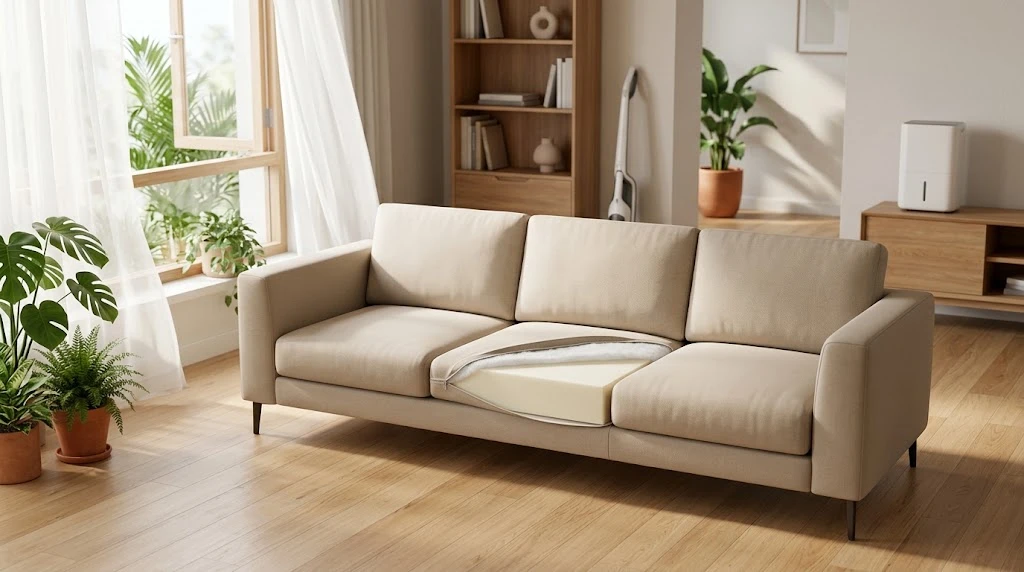
Every piece of furniture in your home tells a story about the air you breathe. Sofas, in particular, accumulate biological material at a pace most people underestimate. Hair, skin flakes, perspiration, and food particles settle into fabrics and cushion fills every single day. These deposits feed dust mites and nourish mold colonies that grow unseen beneath the surface.
For anyone dealing with allergies or asthma, this accumulation creates a daily source of irritation. The solution does not require abandoning comfort or style. It requires understanding which materials block biological growth and which ones encourage it. Here is a comprehensive breakdown of every material choice involved in building an allergy-resistant couch.
Understanding Why Sofas Harbor Allergens
A couch is essentially a large, porous filter sitting in the center of your living room. Every time someone sits down, the cushion compresses and releases a burst of air carrying microscopic particles. Dust mite feces, fungal spores, and decomposed skin cells become airborne in that moment. People with sensitivities react immediately — sneezing, congestion, or watery eyes follow.
The problem deepens over time. Natural materials like cotton and down absorb moisture from both the air and the human body. That trapped humidity creates a microclimate inside each cushion perfectly suited to biological reproduction. Dust mites reproduce rapidly, and mold spreads through damp fibers unchecked.
Breaking this cycle requires cutting off two essentials: food and moisture. Material selection accomplishes both simultaneously. Every choice from the outermost fabric to the innermost fill layer contributes to either preventing or promoting allergen growth.
Choosing the Right Outer Fabric
Think of your sofa’s exterior as a shield. The denser and smoother that shield is, the less hospitable it becomes to microscopic organisms.
Leather and Faux Leather Options
Both materials create an almost impenetrable surface for dust mites and mold spores. Genuine leather requires only occasional wiping with a damp cloth to remain clean. Its natural resistance to moisture means mold has difficulty establishing any foothold on or beneath the surface. Synthetic leather alternatives deliver comparable protection while offering a broader palette of colors and finishes for modern interiors.
Microfiber as a Top Performer
This tightly woven synthetic textile packs millions of fine threads into every square inch. The resulting density makes it nearly impossible for mites to burrow through. Surface contaminants rest on top rather than embedding in the weave, making removal straightforward with a basic vacuum. It performs well in living rooms, family rooms, and any space where people spend extended periods.
Vinyl for Maximum Impermeability
Vinyl creates a completely sealed barrier. No moisture passes through, and no organism can establish itself within the material itself. Originally common in medical and commercial environments, vinyl has found a growing place in homes where allergy management is a priority. Its smooth surface simplifies cleaning to a single wipe-down with a damp cloth.
Performance Textiles Originally Made for Outdoors
Fabrics engineered for outdoor use resist water, UV radiation, and biological degradation. Their solution-dyed fibers maintain tight construction even after years of exposure. Water beads and rolls off rather than absorbing, which denies mold the damp environment it requires. These fabrics have crossed over into indoor furniture precisely because of their exceptional resilience.
Textured Fabrics That Work Against You
Chenille, velvet, and bouclé all feature loose, raised fibers that create thousands of tiny pockets for debris to accumulate. Once particles settle into these textures, standard cleaning methods cannot fully retrieve them. Wool presents a related problem — its natural fibers shed continuously and retain moisture readily. Choosing any of these materials essentially guarantees higher allergen levels regardless of your cleaning routine.
What You Put Inside the Cushions Matters Equally
People spend considerable time evaluating fabrics while paying almost no attention to what fills their cushions. That oversight can undermine every other precaution you take.
High-Density Synthetic Foam
This remains the most reliable fill material for anyone managing allergies. Manufactured polyurethane foam does not absorb ambient moisture the way cotton or feathers do. Its dense cellular structure creates an environment where dust mites cannot establish colonies. Quality foam also resists the gradual compression that leads to uneven, dusty pockets within cushion interiors.
Polyester Fiber Overwraps
A thin layer of polyester batting wrapped around a foam core provides added softness without organic risk. The synthetic composition resists moisture absorption entirely. As long as this layer sits within a tightly woven outer cover, it performs without issue. Many upholsterers use this combination as their standard construction method for modern furniture.
Memory Foam With Caveats
Memory foam’s body-conforming properties make it popular for extended sitting comfort. Being fully synthetic, it shares polyurethane’s resistance to biological colonization. The concern lies in thermal retention — the material traps body heat and, consequently, perspiration. Ensuring adequate airflow in the room or selecting thinner memory foam layers addresses this limitation effectively.
Natural Fills Best Left Out of Your Home
Down feathers rank among the most problematic allergen sources in furniture. As they age, feathers break down into microscopic fragments that escape through fabric weaves. Cotton batting presents its own danger: it absorbs perspiration and humidity, then holds that moisture deep inside cushion cores where mold develops invisibly. Both materials work directly against your goal of a clean, healthy sofa.
The Case for Recovering Instead of Replacing
A solid hardwood frame can last a lifetime. Fabric and foam, however, degrade significantly within a decade. When symptoms point to your sofa as a culprit, discarding the entire piece is neither necessary nor practical. Professional sofa reupholstery restores the soft components while preserving the structural elements that still perform well.
The recovery process starts with removing every soft layer from the frame. Old covers, degraded batting, contaminated foam — all of it comes out. Technicians then install fresh high-density foam cut to exact specifications. New synthetic wraps and allergen-resistant covers complete the transformation.
This approach lets you apply your knowledge of hypoallergenic materials directly. You choose a smooth leather or dense microfiber exterior backed by clean foam. Beyond eliminating accumulated allergens, sofa reupholstery allows you to customize cushion firmness and overall feel to your current preferences.
Financially, the decision makes sense as well. Recovering quality furniture costs a fraction of buying new pieces of equivalent construction. The result is a sofa that looks and feels updated while meeting the strict material standards your health requires.
Tropical and Humid Climate Considerations
Where you live plays a significant role in how aggressively allergens develop. Persistent humidity transforms even well-chosen materials into potential problems without proper precautions. Singapore sofa upholstery demonstrates this dynamic clearly.
Singapore experiences consistently high humidity that saturates the air year-round. Moisture migrates into upholstered furniture through simple atmospheric absorption. Temperature differences between air-conditioned interiors and warm exteriors can create condensation within cushion materials. Furniture positioned in naturally ventilated spaces faces even greater exposure to fungal growth.
When exploring Singapore sofa upholstery solutions, ask providers about specific moisture-countermeasure techniques. Skilled regional craftspeople select foam densities and fabric treatments calibrated to the local climate. They typically recommend outdoor-grade performance fabrics as exterior covers and closed-cell foams without exception. Their deep familiarity with tropical conditions directly translates to furniture that survives and performs.
Vapor barrier membranes represent one of the most important additions in humid environments. Placed between the outer fabric and the cushion interior, these thin layers block perspiration and atmospheric moisture from reaching the foam. For homes in tropical settings, this invisible component transforms furniture longevity and cleanliness dramatically.
Maintenance Habits That Extend Your Results
Even the most carefully chosen materials require consistent care. Allergen management is a long-term commitment, not a one-time installation.
Weekly HEPA Vacuuming
Pass a vacuum with a HEPA filter over every surface of your sofa each week. Pay particular attention to seam lines, crevices, and the areas beneath seat cushions. This brief routine removes skin cells and surface particles before they penetrate deeper into materials.
Hot-Water Laundering of Removable Covers
Every few months, wash removable covers in water exceeding sixty degrees Celsius. This temperature effectively destroys dust mites and neutralizes their waste proteins. Allow covers to dry completely — even slightly damp fabric reintroduces the moisture conditions you are trying to eliminate.
Indoor Humidity Management
Keep your living space below fifty percent relative humidity using dehumidifiers or climate control systems. Dry air directly inhibits mold germination and makes the environment inhospitable to dust mite reproduction. An inexpensive hygrometer provides the feedback needed to verify your settings are working.
Immediate Spill Response
Address any liquid contact within minutes. Blot with absorbent material, then direct airflow across the damp area until it is fully dry. Lingering moisture on or within cushions is the single fastest path to mold establishment.
Internal Cushion Encasements
Allergen-proof zippered covers placed over foam cores before final upholstery application provide an additional protective layer. They block dust mite penetration while allowing air to flow freely through the cushion. This simple, inexpensive step adds meaningful defense beneath the visible surface.
Regular Cushion Rotation
Turn and reposition your cushions on a monthly schedule. This prevents asymmetric wear and exposes undersides to air circulation. The evaporation that occurs during rotation prevents moisture from settling permanently into one area.
Final Considerations
Building an allergen-resistant sofa involves decisions at every layer of construction. Tight, non-porous fabrics like leather, vinyl, and microfiber form an effective exterior barrier. Dense synthetic foams inside the cushions prevent biological colonization from within.
When an existing sofa has become part of the problem, recovery offers a practical and economical remedy. Replacing contaminated materials with hypoallergenic alternatives restores your furniture to a clean, healthy state. Pair those material upgrades with disciplined cleaning and humidity control, and your living room becomes a space where comfort and respiratory health coexist without compromise.

Comments
No comments yet. Be the first to react!